


Commercial truck insurance cost for an Arizona fleet comes from several separate line items, and each truck gets its own total. Insurers price the truck, the load, the drivers, and the routes. This guide shows what moves each line so your Arizona commercial auto insurance quotes make sense.
What Drives Commercial Truck Insurance Cost per Vehicle for an Arizona Fleet?
Every truck on your policy gets rated on its own, and then the pieces add up. Commercial auto insurance for commercial trucks is built from separate coverages, and each one reacts to different facts about your operation. A motor carrier (a business that moves freight by truck) usually buys most of the lines below.
| Coverage line | What it pays for | What moves it |
|---|---|---|
| Primary trucking liability | Injuries and property damage you cause to others in an accident | Truck weight, radius, driver records, the limit you choose |
| Physical damage | Repair or replacement of your own truck and trailers after a crash, fire, or theft | Truck value and age, deductibles, where it is parked |
| Motor truck cargo | The freight you haul if it is stolen or damaged | Type of load, its value, routes |
| General liability | Claims not tied to driving, such as a visitor hurt at your yard | Yard or shop, operations, contracts |
Primary trucking liability pays damages you cause to other people and their property, so this liability insurance line is the biggest for most heavy units. Physical damage pays to fix or replace your own equipment. Cargo insurance pays for the load. The last line protects your business from claims that have nothing to do with driving.
Underwriters (the people at an insurer who price risk) then adjust each line for the specifics of the unit. Weight sets the starting point, because a loaded tractor-trailer can lead to far larger damages than a light delivery van. Radius comes next. A truck that stays near its Phoenix yard prices differently than one that regularly runs 1 000 miles from home. Driver records, claims history, and the value of the trucks and trailers fill in the rest.
Arizona adds conditions of its own. Summer heat on I-10 and I-17 stresses tires and refrigerated units, and both can lead to accidents or spoiled loads. Monsoon dust storms can cut visibility on I-10 between Phoenix and Tucson. Produce loads coming through Nogales carry theft and spoilage exposure. Insurers may weigh all of this when they rate your routes.
Federal rules set a floor. Interstate for-hire carriers register with the Federal Motor Carrier Safety Administration (FMCSA), and its financial responsibility minimums vary by vehicle weight and cargo type. Brokers and shippers often ask for more than those minimums, so your contracts can push limits and premiums up. Check the agency's current published requirements for your operation.
How Much Is Truck Insurance per Month?
So how much is truck insurance per month? It depends, because a monthly payment is the annual premium split into installments, and the annual premium comes from the coverage lines above. We will not print a number here. A figure that fits a local delivery van would mislead owners of larger commercial trucks, and the wrong number sets the wrong expectation. Learn the specifics of your operation that move the monthly bill, then bring them to your quotes.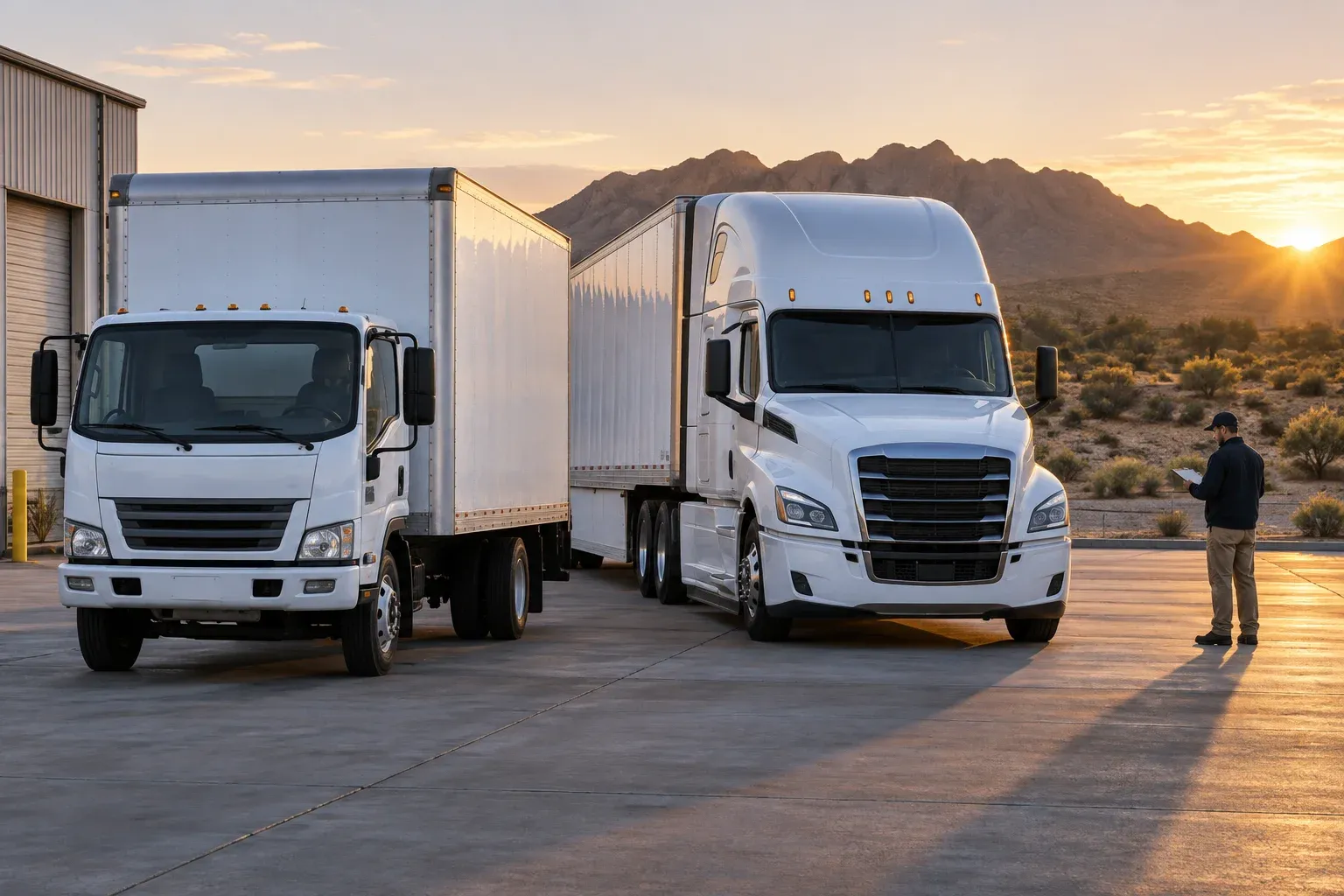
Semi Truck Insurance Cost per Month
Semi truck insurance cost per month usually runs highest of the three truck types below, because a loaded tractor-trailer carries the most exposure to damages on the road. Three facts move it the most.
Authority comes first. Operators who lease onto a larger motor carrier may rely on that carrier's policy for third-party claims, while they buy physical damage and other coverages themselves. Operators running under their own authority buy the full set of coverages. Cargo type comes second, since general freight, refrigerated produce, and hazmat loads each price differently. History comes third. A new authority has no track record, so insurers often price it with extra caution.
Box Truck Insurance Cost per Month
Box truck insurance cost per month is usually lower than for a semi, but it still swings widely. Insurers look at gross vehicle weight, whether you haul for hire or only your own goods, and what rides in the box. Furniture is one risk. Electronics are another, because theft-prone loads draw closer attention. Local operators on short Phoenix delivery routes and carriers hauling to Los Angeles will not price alike, since longer routes add exposure to accidents.
Non CDL Box Truck Insurance Cost
Non CDL box truck insurance cost starts with the weight rule. A commercial driver's license (CDL) is generally required once a single vehicle reaches 26,001 pounds gross vehicle weight rating, so lighter box trucks can be driven without one. Less weight can mean less severity in a crash, yet insurers still price the driver's record, years behind the wheel, and the cargo. These lighter units still appear on a policy as commercial autos. A driver new to commercial vehicles may be rated higher than one with a clean, experienced record. If you cross state lines for hire, federal rules may still apply, so confirm that before you buy.
Bring these items to each quote request:
| Truck type | What moves the monthly bill most | What to bring |
|---|---|---|
| Semi (tractor-trailer) | Authority, radius, load type, driver experience | USDOT number, driver list, loss runs (claim history reports from past insurers) |
| Box truck with a CDL driver | Gross weight, hauling for hire or your own goods, radius | Truck values, load list, routes |
| Non CDL box truck | Driver record, load, local or interstate use | Driver records, load list, garaging address |
Once you know your units, loads, and routes, you can request a quote and an agent will walk through the options with you.
How Much Does Commercial Truck Insurance Cost per Year for an Arizona Fleet?
Trucking insurance for a fleet has an annual cost made of the full-term premium for every unit, plus fleet-level items such as general liability and policy fees. It is a sum of separate ratings, so a policy that schedules two tractors, four box trucks, and a few service autos will not behave like seven identical units. Insurance costs also move at renewal, because claims history, mileage, and driver changes carry forward. A higher limit on liability coverage raises premiums. A higher deductible (the amount you pay before the policy pays) usually lowers them, but it leaves you with more cost after a loss. Ask each insurer for an itemized quote by unit and by coverage, with limits and deductibles side by side. Without that, two quotes cannot be compared fairly.
How Much Is Semi Truck Insurance Down Payment?
Most insurers want an initial payment before coverage starts. The size depends on the insurer, the total premium, and the payment plan, and a premium finance company may be involved. New authorities and drivers with violations may be asked for more up front. The amount for your rig depends on your quote, so ask for the required payment in writing before you bind coverage.
Can a Bigger Down Payment Lower My Monthly Truck Insurance Premium?
A bigger down payment can lower your monthly payment, because less of the premium is spread across installments. It usually does not lower the premium itself. Some insurers may offer discounts for paying in full, so ask. Compare finance charges and fees too: a smaller monthly payment with higher fees can cost more over the term.
Does Adding More Trucks Lower the Commercial Truck Insurance Cost per Vehicle?
Sometimes. Your total rises with every truck, but the average per vehicle can fall when an insurer rates the fleet as a group. Fleet liability insurance pricing usually takes a written safety program and consistent driver standards, and a clean claims history protects that pricing at renewal. Insurers may ask for driver lists, motor vehicle records, and maintenance practices before they offer fleet pricing. Discounts may be available, and they depend on the insurer and your loss history.
The reverse also happens. One at-fault driver can raise the rate on the whole fleet at renewal. Adding heavier commercial trucks can pull the average up. So can adding pickups and other autos your drivers use for personal errands. If you lease trucks, the insurer will want to see which policy responds under each lease agreement. Fleet operators who track driver behavior with telematics (devices that record speed and braking) may have stronger evidence when they ask insurers for better terms.
What Factors Raise Commercial Truck Insurance Cost the Most?
Five factors do most of the damage, and you can influence each one.
- Accidents and claims. At-fault accidents raise premiums, because the damages and repair bills follow, and a pattern weighs more than a single event.
- Driver records. Violations and thin experience with commercial trucks push rates up.
- Cargo and theft exposure. High-value, theft-prone loads cost more to insure, and cargo insurance terms vary by the kind of freight.
- Radius and routes. More miles from home means more exposure to accidents.
- Limits and deductibles. Higher limits and lower deductibles mean higher premiums, a trade you make on purpose.
Buyers make a few predictable mistakes. Some compare only the monthly payment and miss that one quote carries a higher deductible. Some leave out trailers or non-owned units, then find a gap after a loss. Some understate radius or load to look better on paper, which can lead to a denied claim. Others buy the minimums when a contract requires more.
Lowering the bill is a matter of evidence. Driver screening, maintenance records, telematics, and a written safety program give insurers reasons to price you better, and some insurers may offer discounts for them. Comparing quotes matters too, because the same truck can price differently with different insurers. The commercial auto coverage options open to an Arizona business differ by insurer, and an independent agency can compare more than one.
Line Up Your Arizona Truck Quotes Before Renewal
Bring your truck list, loads, and routes, and we will go over the specifics of your fleet and compare itemized options across coverages and deductibles. To start, contact the agency.